Helping Out

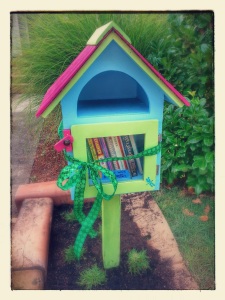
So, today I was invited to attend a portion of the Library Development annual retreat.WP_20130304_001 I think most of you know who they are and what they do. If you don’t please visit the Library Development website. One of the things that came up during the discussion was  the OSL Board of Trustees Advisory Councils. Since it was the Library Development team the discussion centered around the LSTA Advisory Council.

I was trying to convince them that being a member of the LSTA Advisory Council or any Advisory Council to the OSL Board of Trustees was a high honor and much sought after. They didn’t quite believe me (they rarely do) But we did have a good discussion about some of the reasons we think serving on an OSL Advisory Council is a good idea. And I’m going to share those with you now:

  • Leadership experience
  • Opportunity to have a voice in how LSTA funds are spent
  • Contribute to shaping the direction of library services in Oregon
  • Opportunity to see the “big picture
  • Opportunity to boss around state library staff
  • Collaborate across library types

I’ll refer you back to this post when we are recruiting for new advisory council members!

Please accept my apologies for not posting last week, as usual I don’t have a good excuse…

Posted in Uncategorized | 1 Comment

State Library Reorganization Update

I’m sure many of you have been receiving messages from State Library staff requesting that you respond to a survey about State Library services. We are requesting that information because we are currently working on reorganizing in response to the 2013-2015 Governor’s Balanced Budget proposal. I posted about that in December of 2012 if you would like more background information.

We have created a Reorganization Steering Committee which includes State Library managers and staff, OSL Board Chair Sam Hall, Barry Pack and Jeannine Beatrice from the office of the Chief Operating Officer, Julie Curtis, representing the  GRS Advisory Committee, Bob Disher, representing the TBABS Advisory Council and Christopher Rumbaugh, representing the LSTA Advisory Council.

We are meeting weekly to work on a draft plan that I can share with the Legislature during our budget hearing in March. We have spent time on reviewing the services currently offered by the State Library along with our current resource allocations. The OSL staff is meeting with a facilitator this week to discuss their perspectives on the reorganization and each team has created a survey to gather feedback from our stakeholders and customers. We appreciate you taking a minute or two to complete the survey or chat with the staff member who calls.

As is the case with every library we are in business to serve our customers and we are working to provide excellent service to all of you. Thanks for that opportunity.

Posted in Uncategorized | Leave a comment

Public Libraries in the United States Survey

All public libraries in Oregon are required to submit data to the State Library annually that includes collection sizes, operating revenue and expenditures, and staffing, as well as performance indicators, such as public Internet computers, circulation, reference transactions and library visits. Our own Ann Reed works diligently to gather the data and to verify the accuracy of the data. For the last 23 years we have submitted that data to the federal government, it currently goes to the Institute of Museum and Library Services, and it is combined with other state level data to provide the most comprehensive data from the nation’s 17,078 public library outlets.

The FY 2010 report on Public Libraries in the United States includes state-by-state profiles for the first time. In Oregon public libraries circulation has increased from 15.35 items per capita in FY 2009 to 16.25 in FY 2010, a 5.8 % increase. The regional average is 7.9 per capita and the national average is 8.27 circulations per capita. I’m certain this is not surprising to anyone who works in a public library in Oregon but this is good information to share with your funders and policy makers.

The Director of the Institute of Museum and Library Services in her blog post commented that:  “The FY 2010 report on Public Libraries in the United States  shows the vitality of public library service in America. Public libraries are anchors in their communities, serving a broad constituency with both traditional services and new ones that reflect the changing needs of their populations.  According to the report, public libraries served 297.6 million people.  With a total U.S. population of more than 308.7 million in that year, it’s easy to see how relevant these community institutions are.

The report is particularly compelling in documenting the importance of libraries to the nation’s children: children’s materials comprise a full one-third of the 2.46 billion materials circulated and 61.7 percent of libraries’ 3.75 million public programs are designed for children.

And the relevance of libraries in our digital age is reinforced with the data.  Since 2003 the number of e-books in the nation’s public libraries has tripled and in the last ten years the number of public access computers has doubled.”

Report Cover for the FY2010 Public Library  Survey

Posted in Uncategorized | Leave a comment

A Short History of Libraries and Early Learning in Oregon – Part Three

Reading for Healthy Families (RFHF) is a direct result of the Early Literacy Initiative I posted about two weeks ago. The Oregon Community Foundation provided at least one planning grant. After much work on the part of Katie Anderson our youth services consultant and Susan Lindauer who was with the Oregon Commission on Children and Families the RFHF project was funded by grants from the Oregon Community Foundation and the Paul G. Allen Family Foundation.  The project was active from 2008 to May 2011.

RFHF provided 295 Healthy Start family support workers and children’s librarians intensive training in the Every Child Ready to Read @ your library early literacy curriculum and other related topics between October 2008 and May 2011.  Participating family support workers and librarians provided early literacy education to over 3,000 families while the RFHF project was active.  Many of them continue to use the information and resources from RFHF to provide families with the early literacy information, resources, and activities they need to get their children ready to learn to read when they start kindergarten.

The grant included funding for evaluation and I would encourage you to take a look at the final evaluation done by NPC Research.

Next week: What Next…

Posted in Uncategorized | Leave a comment

A brief pause in our history lesson

I will return to our history of libraries and early learning in Oregon next week. This week I want to share a concept with you that I think can be the key to early learning hubs that are being created to make sure every child in Oregon starts school ready to learn. In late 2011 the Stanford Social Innovation Review published a paper on collective impact. According to this article the five conditions of collective success, as demonstrated by Strive in Cincinnati are:

  • Common Agenda
  • Shared Measurement System
  • Mutually Reinforcing Activities
  • Continuous Communication
  • Backbone Support Organizations

If you review the most recent draft of the Community Based Coordinator of Early Learning Services (HUB) report from the Early Learning Council you will see that all five of these components are included. I’m pretty excited about this and would love to hear your thoughts about the concept of collective impact and libraries as it relates to early learning.

Posted in Uncategorized | Leave a comment

A Short History of Libraries and Early Learning in Oregon-Part Deux

In late fall of 2005, an LSTA grant was awarded to Multnomah County Library for “Planning for a Statewide Early Literacy Initiative.” The purpose of this project was to develop a coordinated statewide early literacy initiative plan featuring public libraries as the leaders in improving literacy among children in their early years. Specifically, the project sought to promote early literacy activities in public libraries and give library staff the tools to implement the best evidence-based practices. A team of sixteen project advisors representing the library and early childhood communities guided the work of the project consultant.

The advisors conducted nine meetings held from August to October 2005 in key regions of the state. These meetings, which included thousands of invitees and hundreds of participants, aimed to determine how best to work together to ensure that public libraries can lead early literacy efforts.

At their June 2006 meeting, the Oregon State Library Board of Trustees approved a State Library budget package to be submitted to the Governor that included several changes to the Ready to Read Grant program that would shift the focus of that grant program to early literacy, and included increased funding to support early literacy efforts. Those changes were guided by the Initiative Report to the State Library Board.

In 2006 the Oregon Community Foundation  awarded a $9,000 “planning for implementation” grant to the Oregon Commission on Children and Families, in partnership with the State Library, to create a grant project that would provide early literacy training and resources to Healthy Start family support workers who work directly with at-risk parents, and with librarians who work with the family support workers and families in the library. From 2008-2011 the Reading for Healthy Families project was funded by the Oregon Community Foundation and the Paul G. Allen Family  Foundation.

We’ll talk about Reading for Healthy Families next week.

Posted in Uncategorized | Leave a comment

A Short History of Libraries and Early Learning in Oregon-Part one

I am taking a page from Charles Dickens and will be serializing this Short History over three weeks. I think I have mentioned in one or more of my past posts, we are on the cusp of revolution here in Oregon. Especially as it relates to early learning and libraries. In anticipation of that revolution I would like to share a little bit of the history of early learning and libraries in Oregon.

In 1993 (yes, 20 years ago) the Oregon Legislative Assembly passed a law that created the Children’s Services Improvement Grant (CSIG) program. Previously public libraries had received a per capita payment from the state general fund that could be used for just about any purpose the library desired. In the early 1990′s forward thinking librarians, including then State Librarian Jim Scheppke, had realized that we needed to focus our state spending in libraries and that children’s services would provide a great bang for our buck. So the CSIG program was created and provided funding to every legally established public library in Oregon to “establish, develop, or improve public library service for children”. It was a huge success and libraries who had never offered children’s services began to do so now. Libraries who had children’s services were able to develop and  improve them. And there was great happiness in the land.

Over the next several years the CSIG program became the Ready to Read Grant program and the public library consultant position that had been created to support and administer the CSIG program became the youth services consultant position. The biennial general library training offered by the State Library for library staff from small and rural libraries became the Focus on Children and Young Adults Institute and trained staff from small and rural libraries who provided services to children.

Around the same time the legislation was passed that created the grant program for public library children’s services improvement, the Commission on Children and Families system was created. A number of public libraries, including Salem Public and Clackamas County Library, developed an LSTA project that would partner public libraries with local Commissions’ Healthy Start programs. Reading for a Healthy Start provided early literacy training for Healthy Start family support workers and library staff. The partnership joined the early literacy expertise of the public library staff and the contacts with children and families at risk that Healthy Start workers had. In addition to the training, the project provided family support workers with books and materials to share with families and developmentally appropriate children’s books were distributed to families. We were on our way.

Tune in next week when the Oregon library community undertakes an Statewide Early Learning Initiative.

Posted in Uncategorized | Leave a comment